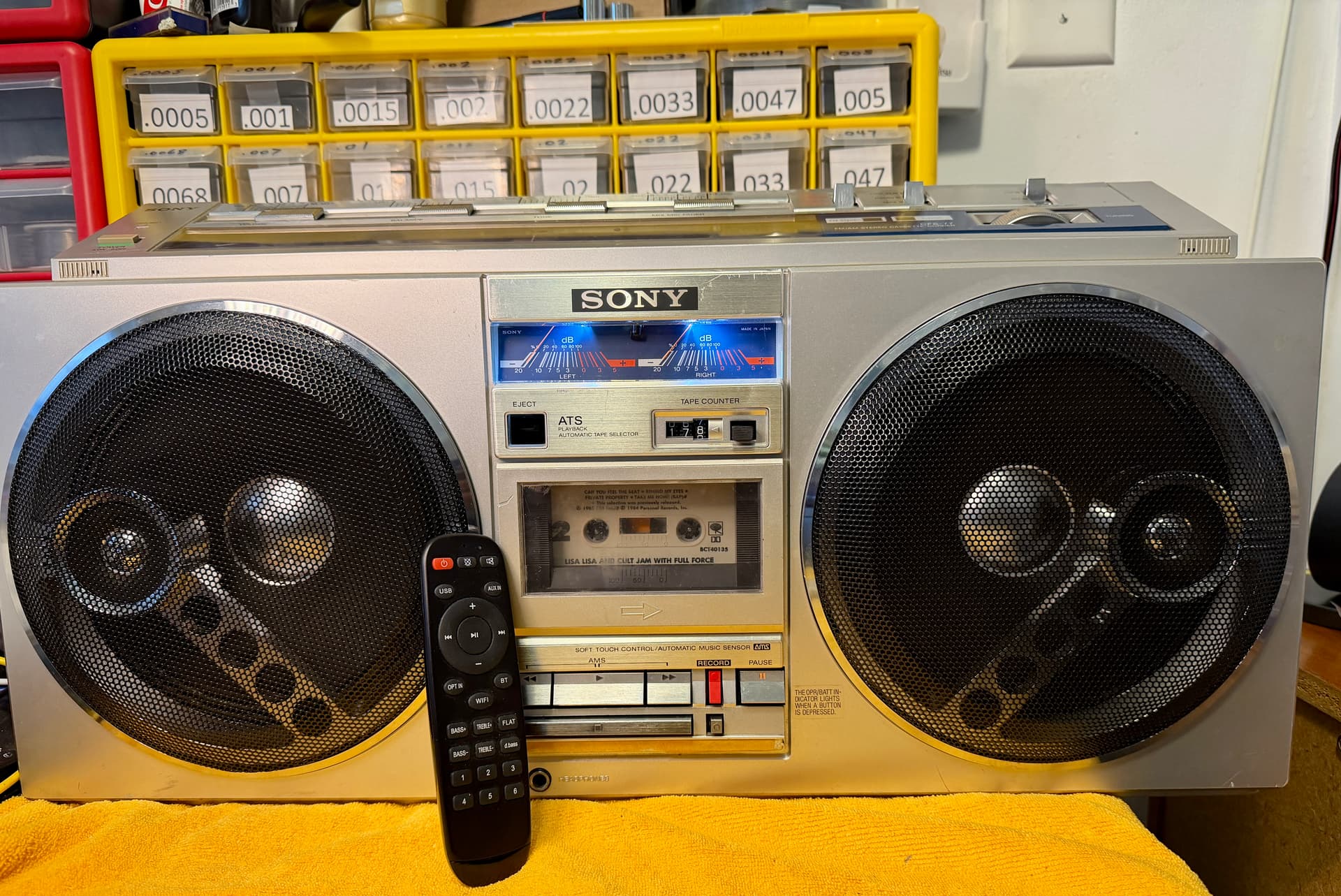
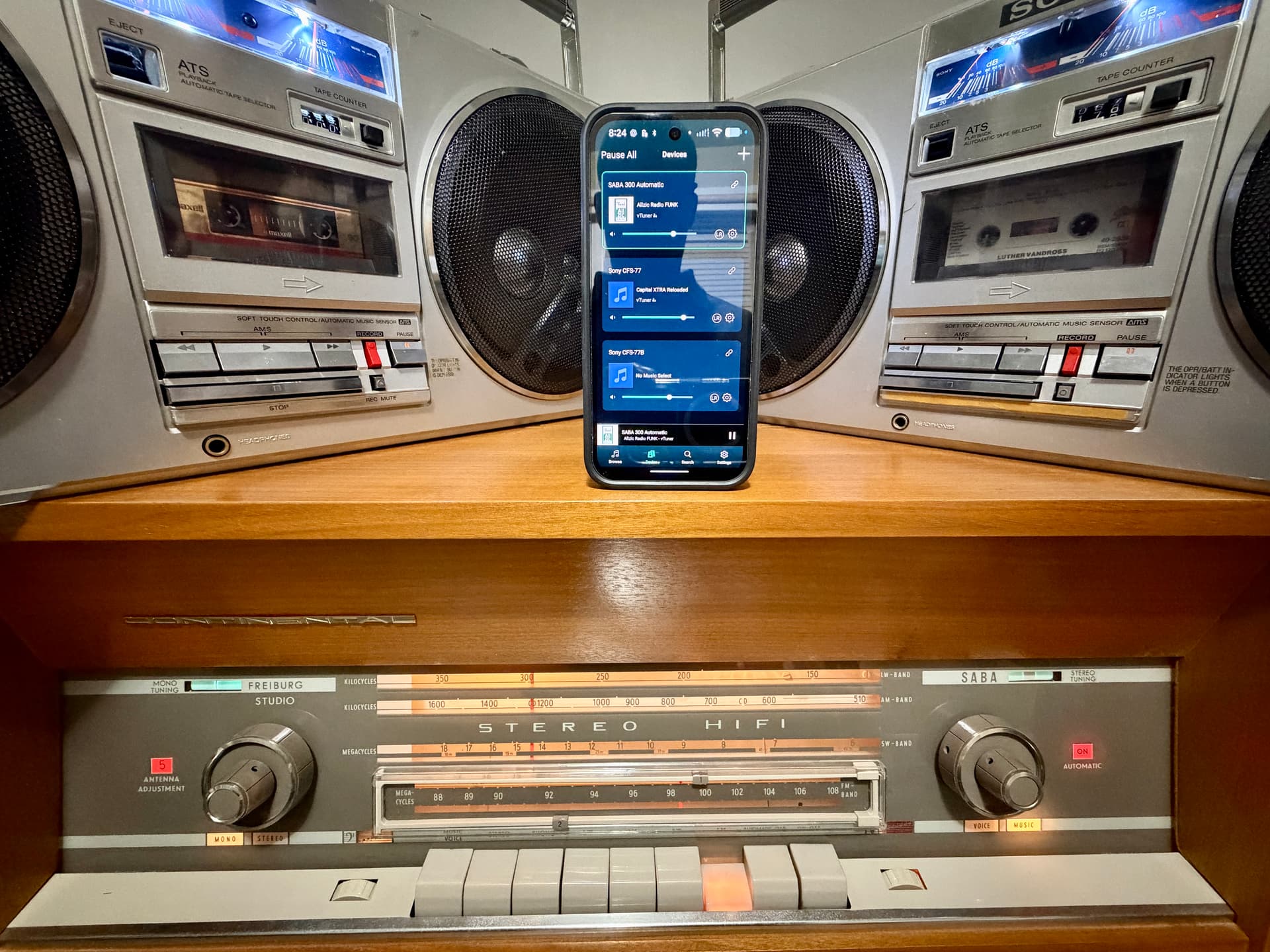
This is the second Sony CFS-77 I’ve brought back to life and upgraded to Wi-Fi streaming. The restoration side covered the usual suspects: new belts, fresh capacitors, rust treatment from water exposure, and repairs to the broken record-pause slider and the cassette deck’s contact switches. I still need to get a 3D-printed eject button.
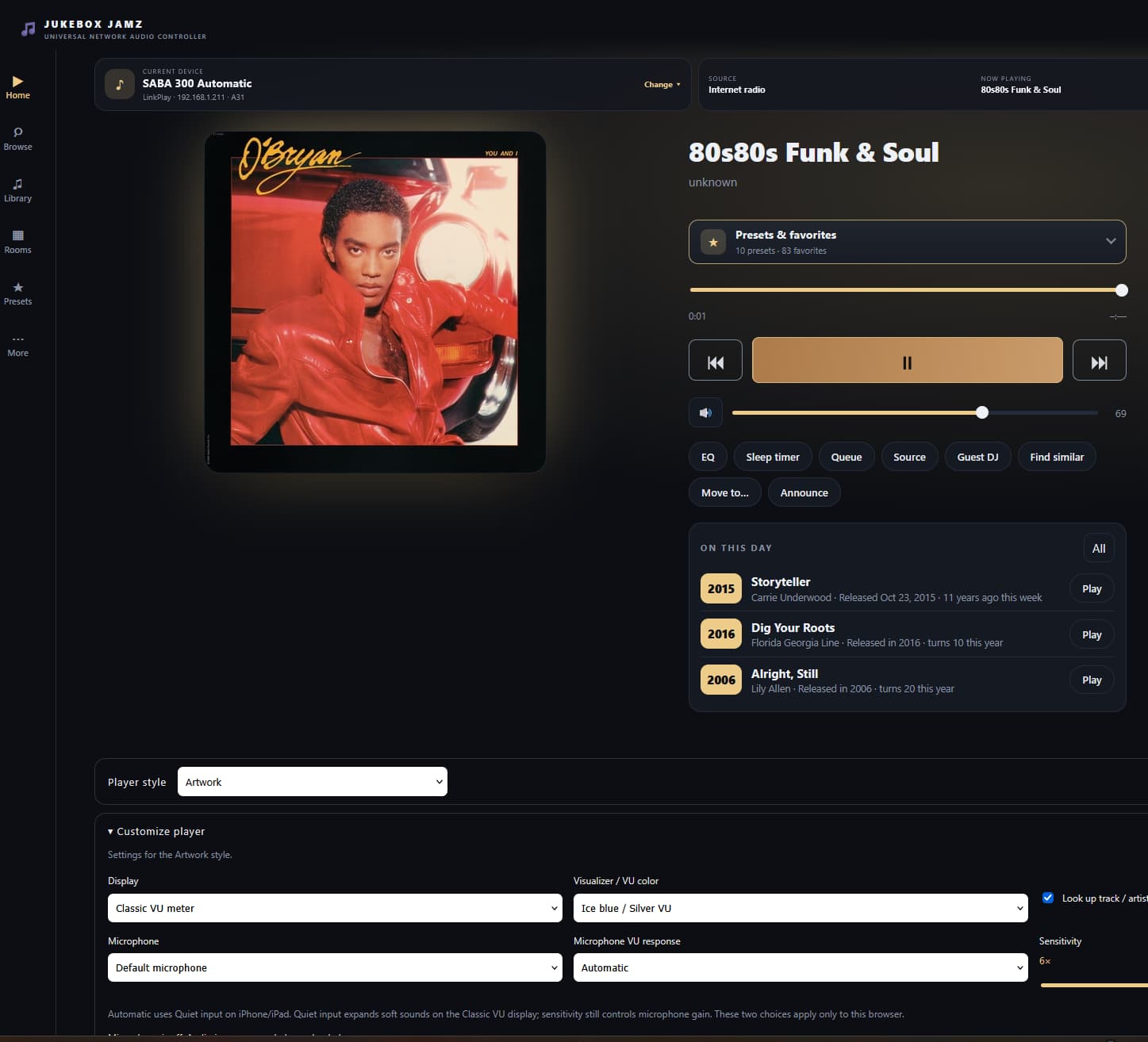
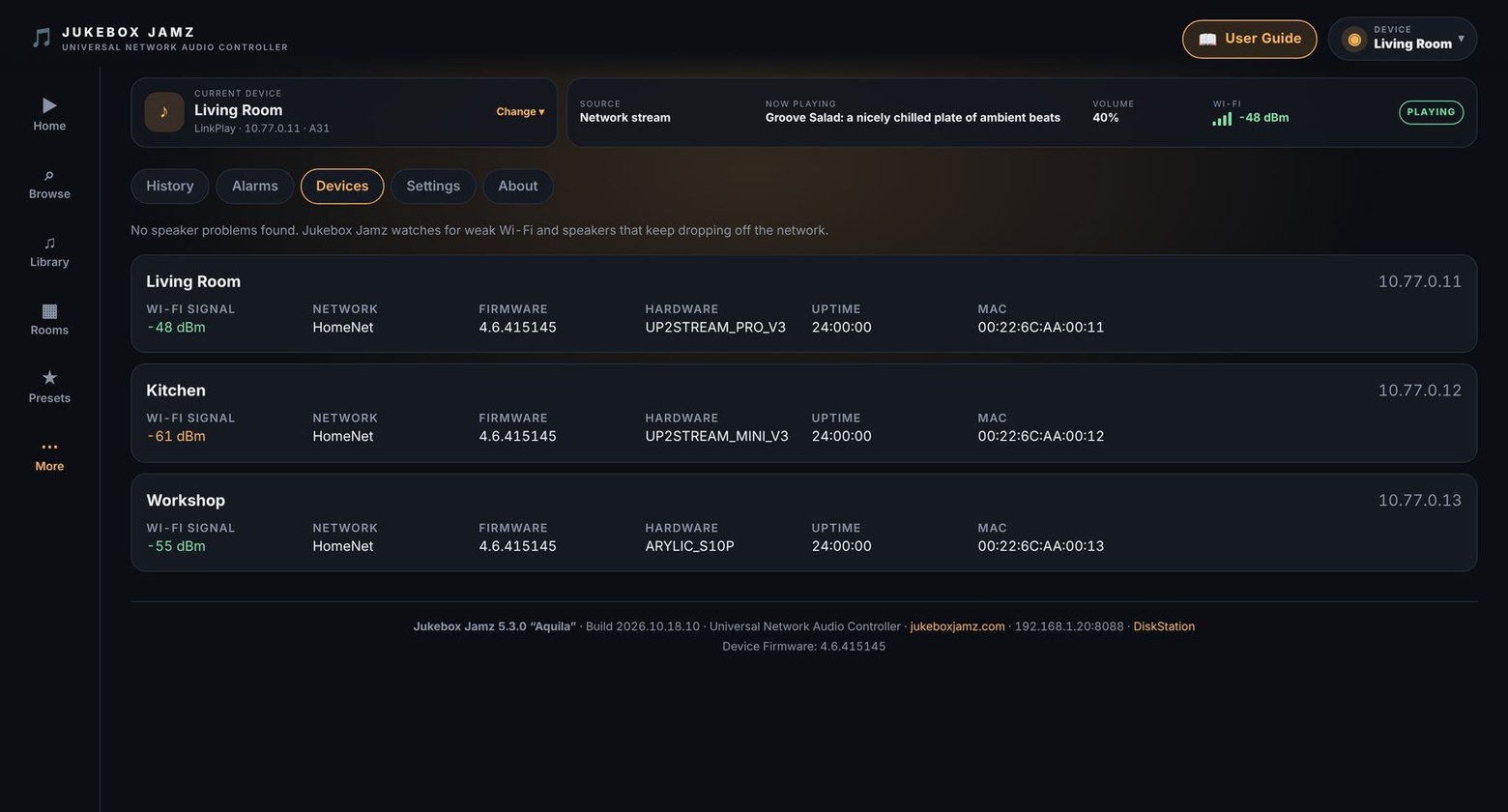
It can also be fully controlled and managed by my own app, JukeBox Jamz, coming soon for Synology NAS devices. Custom Web Connector on Synology NAS - #12 by ktademy
Switch the function selector back to RADIO or TAPE and it’s a stock 1980s boombox again. Nothing original was cut or removed, so the whole upgrade can be undone.
The Details
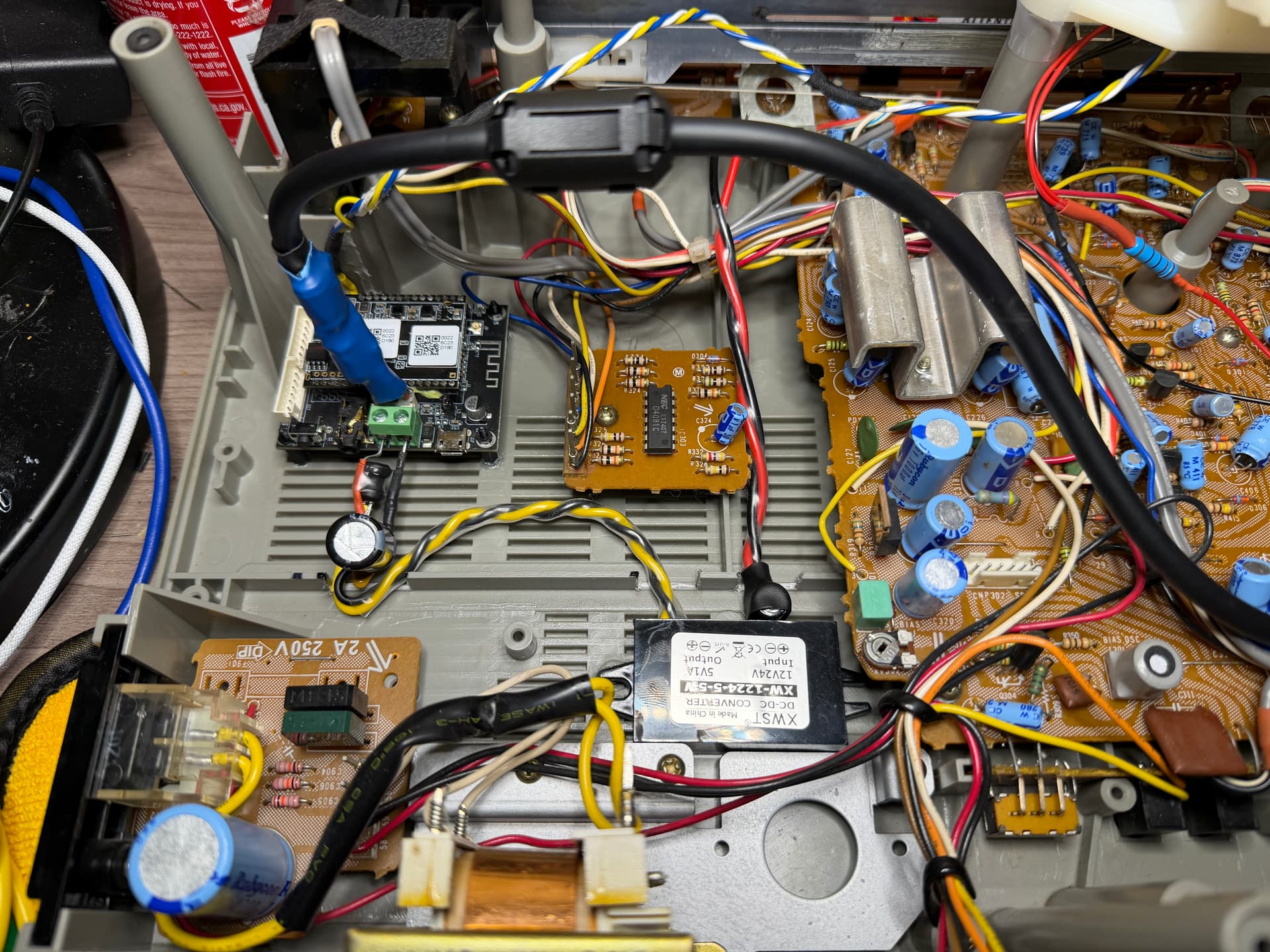
The board needs a clean 5 volts, but the CFS-77’s power supply runs at about 13.7. A compact DC-DC converter steps that down. The trouble is that converters like this switch on and off hundreds of thousands of times a second, and that switching makes electrical noise. On a vintage set that turns into whine on AM, hiss in the speakers, or ticking from the Wi-Fi. Every extra part in the photos is there to stop that, or to protect the radio:
-
A small inductor coil on the 5 V line. Blocks the converter’s high-frequency switching noise from getting back into the radio’s wiring.
-
A large 1000 µF capacitor and a small ceramic capacitor, right at the board’s power pins. Each time the Wi-Fi transmits, the board pulls a quick burst of current. These capacitors supply each burst on the spot, so the burst never travels back through the radio as an audible tick. The big one covers the bursts; the little ceramic one catches the fastest spikes.
-
A 1 amp fuse at the power tap. The radio was never designed to feed an extra circuit. If anything in the new wiring ever shorts, the fuse blows first, protecting the radio’s original power supply and transformer.
-
An overvoltage clamp at the media board. If the converter ever fails in a way that passes the radio’s full 13.7 volts straight through, this small diode sacrifices itself and blows the fuse before the board can be damaged.
-
Shielded audio cable with a clip-on ferrite. These keep the board’s own Wi-Fi signal out of the audio path on the way to LINE IN.
-
Small resistors on the left and right audio lines. They let the media board and the original rear jacks share the same input, so plugging something into the back still works.
-
A pair of capacitors on the audio ground. They break the ground loop, the classic source of hum when two pieces of electronics share a connection.
Little touches
-
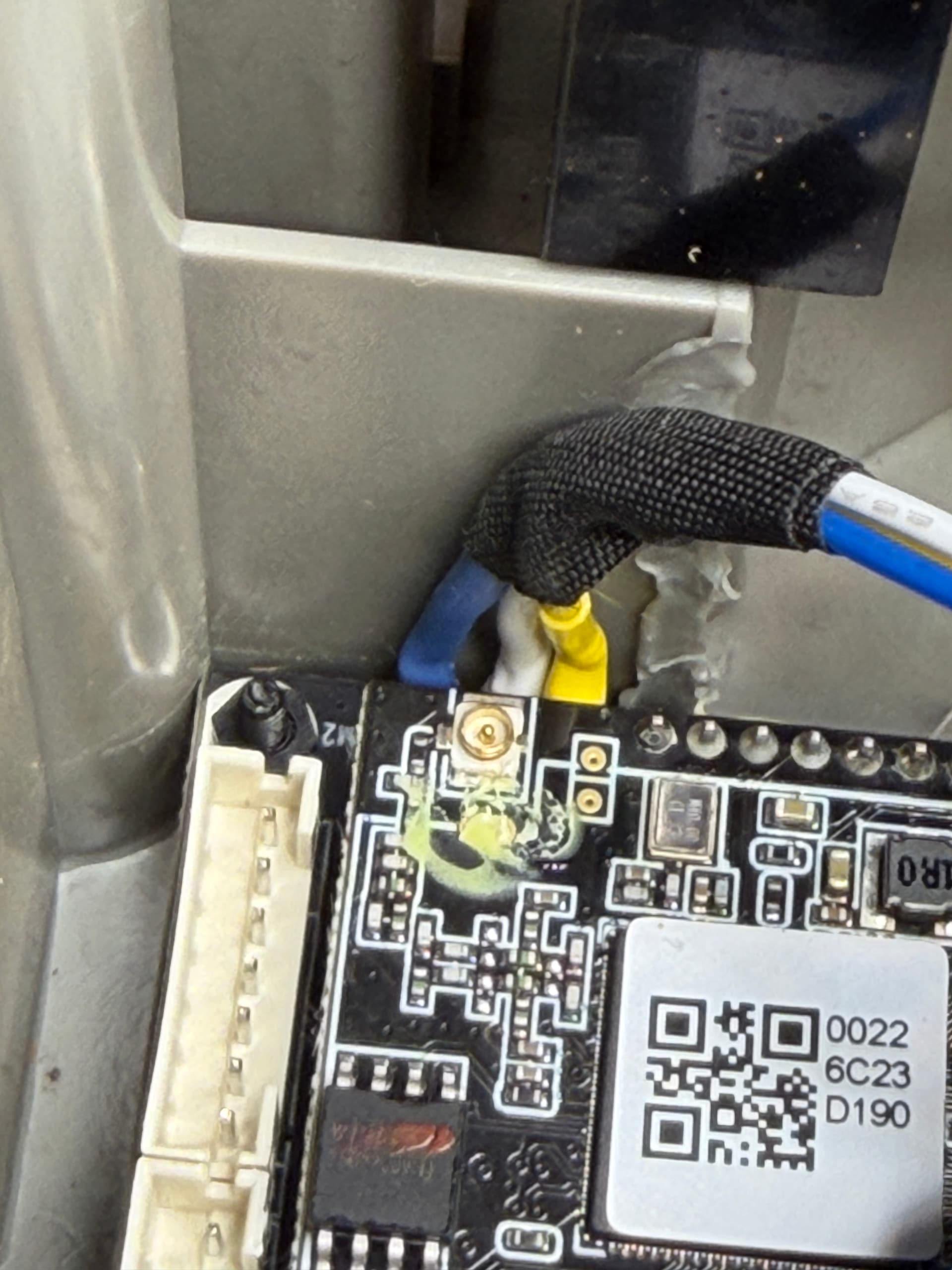
The media board’s small stock Wi-Fi antenna is gone. In its place is one on an 18" cable, mounted where reception is best and well away from the radio’s wiring. Moving the Wi-Fi antenna made a big difference in noise reduction.
-
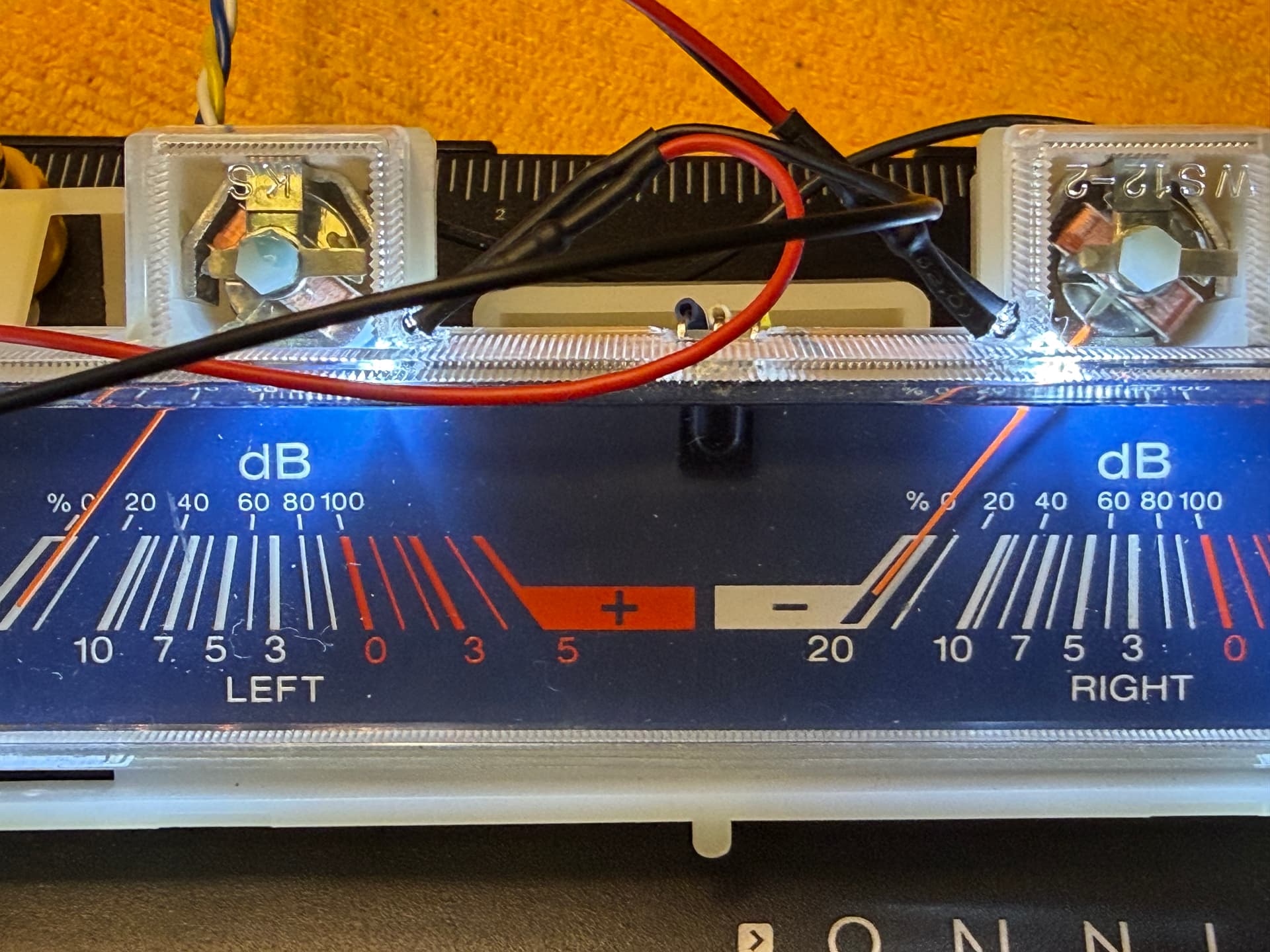
The infrared remote receiver was moved off the media board and into the VU meter housing [yel/wht/blu wires in photo], where the remote can actually see it. I hope Arylic make extending the IR receiver for the Mini less cumbersome. It should have an onboard connector like the Pro version.
-
LED lighting now makes the meters glow.
The best part
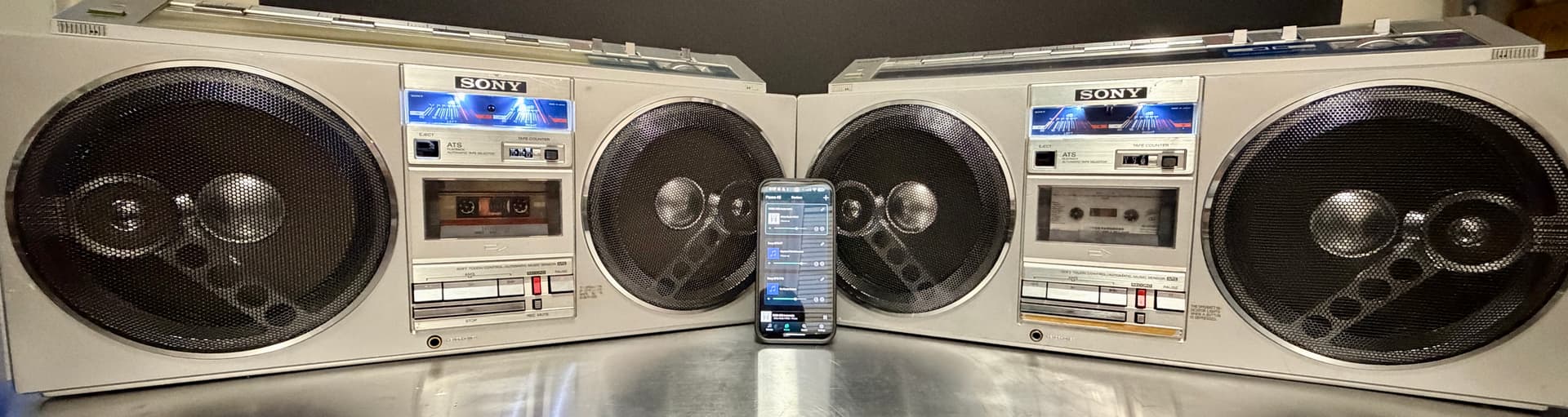
Because both CFS-77s are now streaming, I can group them to play the same stream in perfect sync. That works alongside my other upgraded radios too, including a 1953 SABA 300 tube radio, and a Kasuga KC-2602 boombox. Three
’80s boomboxes and a 70-year-old German tube set, all playing the same song at once.
Now that I’ve finished building my own custom app using the HTTP API, I have access to many advanced features not available in the mobile app or the built-in web interface. I can move a live stream from a device in one room to another and the feature I like most is, I configured all my devices to resume the last active stream upon startup. I also built-in an additional 90 saved favorites on top of the 10 presets!